
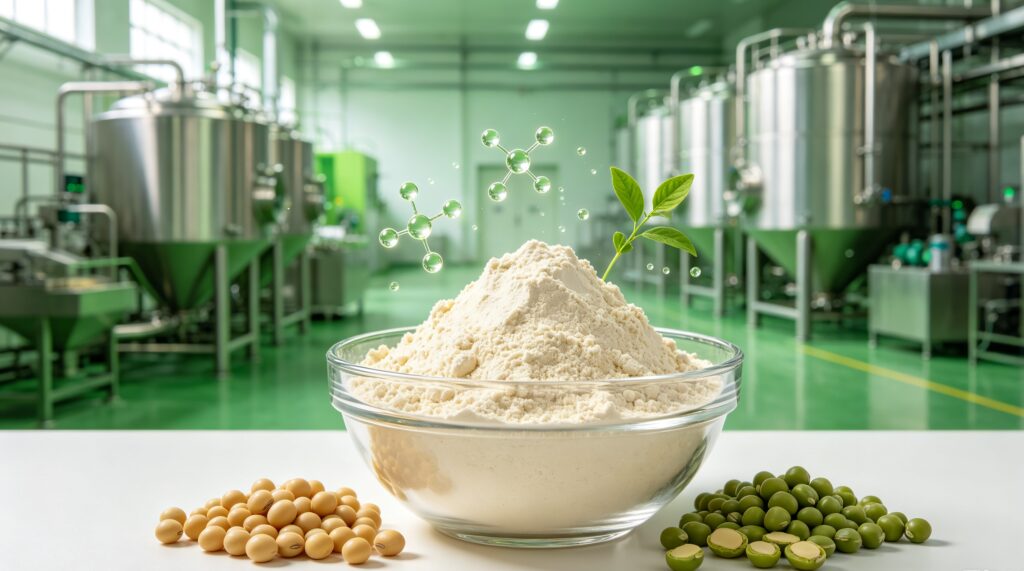
In modern biomanufacturing, agriculture, and fermentation industries, protein-based raw materials serve as essential building blocks for countless production processes. These specialized ingredients vary widely in origin, processing technique, and functional behavior, making it critical for businesses to understand the distinct categories available on the market. From microbial cultivation to animal feed formulations, each protein type brings specific benefits that can significantly influence operational efficiency and output quality.
This guide provides a comprehensive overview of the main industrial protein classifications, their defining traits, and the sectors where they deliver the greatest value. Whether you are formulating fermentation media or developing nutritional supplements, knowing these differences will support smarter sourcing decisions.
Hydrolyzed Proteins – Bioavailable Peptide Solutions
Hydrolyzed proteins represent a major segment within the industrial protein sector. Through controlled enzymatic breakdown or chemical processing, manufacturers cleave native protein chains into shorter peptide fragments and free amino acids. This deliberate degradation dramatically improves water solubility and digestive bioavailability compared to intact proteins.
Key features: rapid nitrogen release, excellent dispersion in aqueous systems, and consistent peptide profiles. These attributes make hydrolyzed proteins highly suitable for microbial feedstocks, cell culture supplements, foliar nutrient sprays, and high-performance animal diets. Producers also value their predictable behavior under varying temperature and pH conditions, which simplifies process scale-up.
Protein Peptones – Nutrient-Rich Microbial Growth Media
Protein peptones constitute a specialized subclass of nitrogenous nutrients derived from partial protein digestion. They are composed of a complex mixture of oligopeptides, dipeptides, free amino acids, and inorganic salts that together create a readily assimilable energy and nitrogen source for microorganisms.
Industrial microbiologists frequently turn to peptones for fermentation runs involving enzyme synthesis, antibiotic production, probiotic cultivation, and organic acid manufacturing. The batch-to-batch consistency and balanced nutritional profile of high-quality peptones reduce variability in cell growth kinetics and metabolite yields, making them a staple ingredient in both research labs and large-scale bioreactors.
Animal-Based Proteins – Traditional High-Performance Sources
Proteins sourced from animal tissues—including bovine, porcine, fish, and poultry by-products—remain a cornerstone of many industrial applications. These materials offer a naturally complete amino acid spectrum, with particularly high levels of essential sulfur-containing and branched-chain amino acids.
In practice, animal-derived proteins are extensively used in compound animal feeds, pet food formulations, and certain biopharmaceutical process aids. Modern rendering and purification technologies have significantly enhanced the purity, shelf life, and functional consistency of these products, addressing earlier concerns about contaminants and odor. Their robust nutritional density continues to make them a cost-effective choice for high-intensity production environments.
Plant-Based Proteins – Sustainable and Scalable Alternatives
Driven by both economic and environmental considerations, plant-derived proteins have gained substantial traction across industrial sectors. Soybean, pea, rapeseed, wheat gluten, and rice protein isolates are among the most common sources, each offering distinct amino acid fingerprints and techno-functional properties.
Beyond their renewable nature, plant proteins provide moderate nitrogen levels, favorable fatty acid profiles, and lower production carbon footprints. They serve effectively in organic fertilizers, aquaculture feeds, meat analogue binders, and bio-based adhesive formulations. Ongoing breeding and extraction innovations continue to narrow the performance gap between plant and animal proteins, expanding their applicability in previously animal-dominated niches.
Functional Protein Ingredients – Tailored for Specific Performance
Beyond the basic source-based categories, a growing number of industrial proteins are engineered for targeted functionality. These specialty ingredients are modified through physical, enzymatic, or chemical means to achieve predetermined characteristics such as:
Enhanced heat stability for high-temperature extrusion
Controlled gelation or emulsification properties
Adjusted particle size distribution for uniform blending
Reduced allergenicity through selective hydrolysis
Customized nitrogen-to-peptide ratios for precise fermentation control
Such functional variants allow formulators to fine-tune product textures, reaction kinetics, and end-use performance without altering base raw material categories. Suppliers often collaborate with clients to develop proprietary grades that align with proprietary process parameters.
Practical Selection Criteria for Industrial Protein Sourcing
Choosing the optimal protein category for a given operation involves a multi-factor assessment. Decision-makers should consider the following parameters:
Application end-use – Is the protein intended for microbial growth, animal nutrition, plant biostimulation, or technical manufacturing?
Nitrogen content and profile – Total Kjeldahl nitrogen (TKN) and soluble nitrogen fractions directly impact metabolic responses.
Solubility behavior – Does the process require cold-water solubility, or can heat-assisted dissolution be accommodated?
Purity and anti-nutritional factors – Residual fats, fibers, or trypsin inhibitors may interfere with sensitive systems.
Supply chain reliability – Consistent sourcing, lead times, and quality certifications ensure uninterrupted production.
Regulatory compliance – Feed-grade, food-grade, or technical-grade specifications dictate allowable uses.
Engaging with an experienced industrial protein supplier can streamline this evaluation. Reputable partners offer not only a diverse product portfolio but also analytical support, formulation advice, and custom blending services to match unique process demands.
We have a wide variety of protein types, please contact us:https://xmhx-gelatin.com/
Email:liping@hx-gelatin.com