
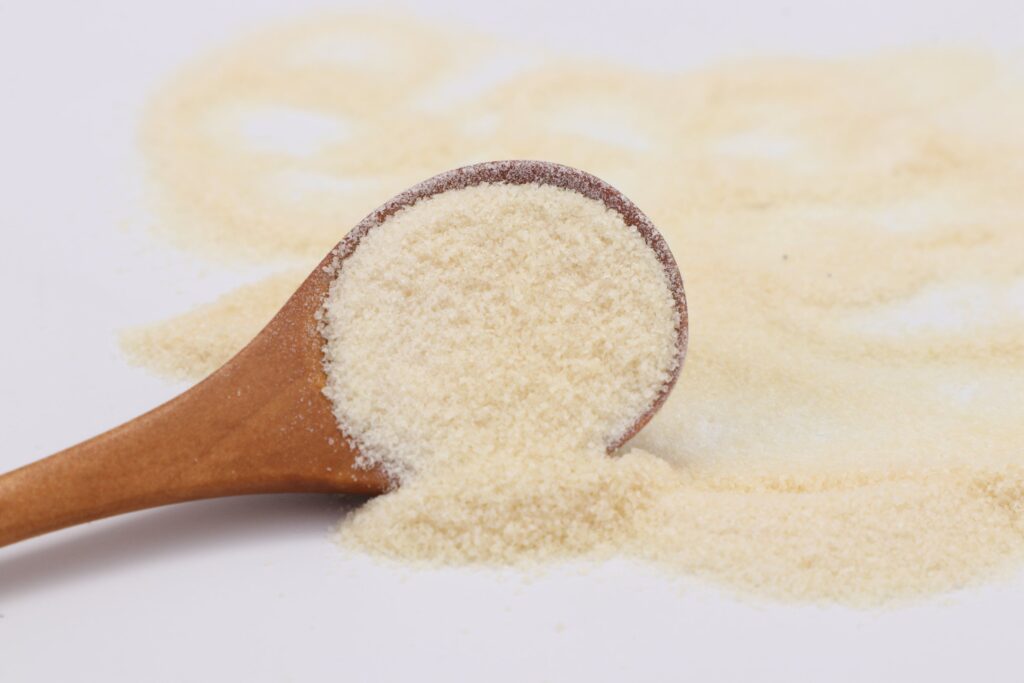
Edible Gelatin Applications Across 6 Industries
- Candy and confectionery — the classic use. Gummy bears, fruit chews, and marshmallows rely on gelatin for gelling, chewiness, and foam stability. A 200–225 Bloom grade delivers the familiar balanced bite.
- Dairy and desserts — yogurt turns thicker and resists whey separation, ice cream forms fewer ice crystals, and mousses and puddings hold a creamy structure that sets softly.
- Meat processing — hams and sausages gain water-binding power and better yield. Restructured meats hold together for clean slicing, and aspic coatings add shine while reducing moisture loss.
- Bakery — cakes and pastries retain moisture longer, dough gains structure, and glazes get a glossy finish. These benefits extend shelf life without changing the recipe’s character.
- Beverage clarification — beer, wine, and fruit juice become crystal clear when gelatin binds suspended particles and tannins, then settles them out.
- Table jellies and panna cotta — the dessert classics. Gelatin sets clear, wobbly jellies and silky panna cotta with a clean melt-in-the-mouth texture.
These six industries share one thread: they all need a protein that gels, thickens, and stabilizes without adding flavor. Gelatin delivers all three from a single clean-label ingredient.
How to Choose Edible Gelatin
Start with Bloom, the gel-strength number. Lower Bloom (150–180) suits soft desserts and mousses; mid-range (200–225) fits classic gummies; higher values deliver firm jellies and chewy candies.
Source matters for the label. Bovine gelatin offers high strength and neutral taste, porcine processes fast with excellent clarity, and fish gelatin answers halal, kosher, and low-melting-point requirements. Form follows the line too: powder for automated dosing, leaf for precision work, instant for quick dissolution.
Always verify the specification sheet before ordering. Food-grade gelatin carries tight limits on sulfur dioxide, heavy metals, and microbiology, with salmonella and E. coli absent in every batch.
Bottom Line
Edible gelatin applications span candy, dairy, meat, bakery, beverages, and desserts because one protein handles texture, stability, and clarity so well. Match the Bloom and source to the application, verify the certificate of analysis, and the rest falls into place.
Written by Xiamen Huaxuan Gelatin Co., Ltd.
Further Reading